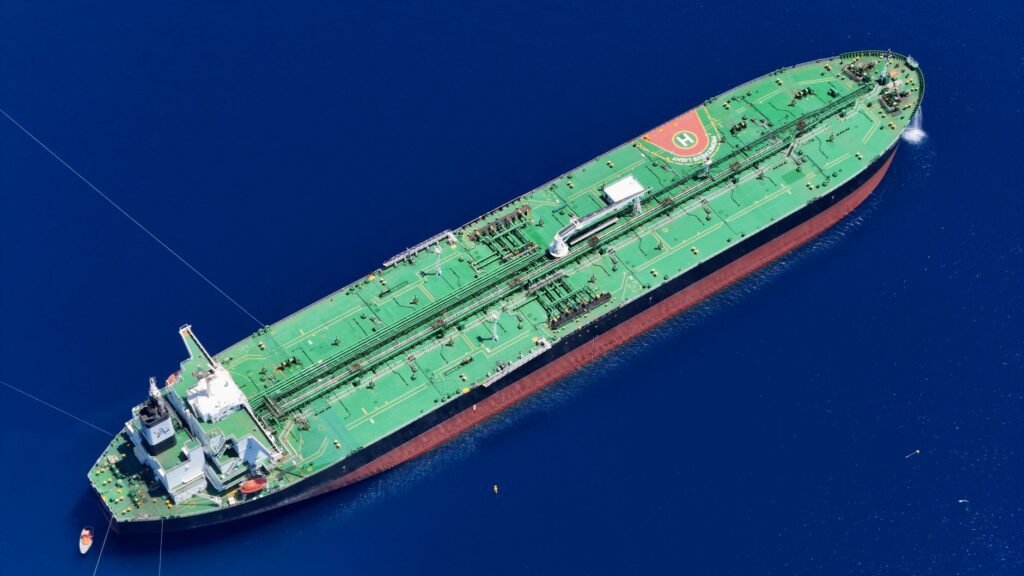
Naval mines have halted three tankers attempting to travel the Strait of Hormuz via routes considered illegal by Tehran, Iranian Revolutionary Guards said on Tuesday.
“Two violating oil tankers were set ablaze and halted due to the explosion of mines planted by the brave sailors of the IRGC Navy at an illegal crossing point in the southern part of the Strait of Hormuz,” the Guards said in an earlier statement on their official Sepah News website.
The Guards later said in a statement carried by state TV that a third oil tanker “exploded and caught fire after striking a naval mine south of the Strait of Hormuz.” The tanker “carrying over 2 million barrels of crude oil, had deactivated all of its radar and navigation systems,” the statement added.
Iranian forces have, since the outbreak of the Middle East war, repeatedly targeted ships attempting to pass through Hormuz via a southern, U.S.-approved route close to the Omani coast. President Trump has said on several occasions that the Strait of Hormuz has been cleared of all mines.
Nuclear stance and diplomatic moves
Iran’s security chief, Mohsen Rezaei, on Tuesday told visiting Pakistani army chief Asim Munir that Tehran will not allow nuclear material to leave the country, according to state TV. “Not even a tiny bit of enriched nuclear material will leave Iran. Such materials constitute a major asset and national wealth for the Iranian people, intended for use within the country,” said Rezaei, secretary of Iran’s Supreme National Security Council. “There will be no negotiations until America takes steps to build trust — a process that must begin with the fulfilment of Iran’s conditions.”
President Trump has made preventing Iran from obtaining a nuclear weapon the administration’s top priority. “They can’t have a nuclear weapon,” Mr. Trump said Monday night at a rally in Kansas. “OK, and they won’t. By the way, somebody said you could leave right now. It’s true. We can leave right now. They’re not going to have a nuclear weapon.”
Qatar and Pakistan have presented Washington and Tehran with a compromise proposal aimed at preventing renewed escalation and bringing the two sides back to the negotiating table, Qatari outlet Al-Araby Al-Jadeed reported, citing informed sources. The initiative was met with U.S. approval and a positive response from Iran, the outlet reported.
Regional incidents and U.N. appeals
Iran’s envoy to the U.N., Gholamhossein Darzi, sent a letter to United Nations Secretary-General Antonio Guterres on Tuesday detailing concerns over the potential use of the so-called “Mother of All Bombs” by the United States if the war with Iran restarts after the midterms, according to state-run ISNA news.
Saudi Arabia said Tuesday it had intercepted a drone targeting Riyadh, as well as a missile it previously said was taken down. Maj. Gen. Turki Al-Maliki, spokesman for the Saudi-led coalition fighting in Yemen, said on X that a drone had also been intercepted and destroyed, without specifying who was believed to have launched it.
Meanwhile, the death toll from a Houthi missile strike on a government military camp in southern Yemen rose to 73 people Tuesday, making it the deadliest strike since fighting in the country began escalating three months ago, a senior Yemeni government official said Tuesday.