With just two weeks until the 2026 midterm elections, anticipation and anxiety will only accelerate as social media is rife with the latest polls, early vote data and plenty of rumor. When it comes to election night itself, though, there will be some uniformity in the results being reported and the way the numbers are being interpreted.
That is due in part because 2026 will mark the first cycle in a decade that all of the major networks will rely on Associated Press vote-count data in their election coverage. News outlets will still make their own race calls, including the AP, but the reliance on the data is notable given the importance placed on the media’s role in declaring a winner. The AP deploys around 5,000 vote count reporting units at local precincts and county offices to report vote totals.
The networks also are on the same page when it comes to exit polls. The AP, along with ABC News, CBS News, NBC News, CNN, Fox News and MS NOW, also are on board with The Voter Poll, a broad state-by-state survey of verified voters that is designed to capture those who vote by mail and in person. Launched in 2025, the survey conducted by SSRS is the successor to the Edison/National Election Pool exit poll and AP VoteCast/Fox News Voter Analysis.
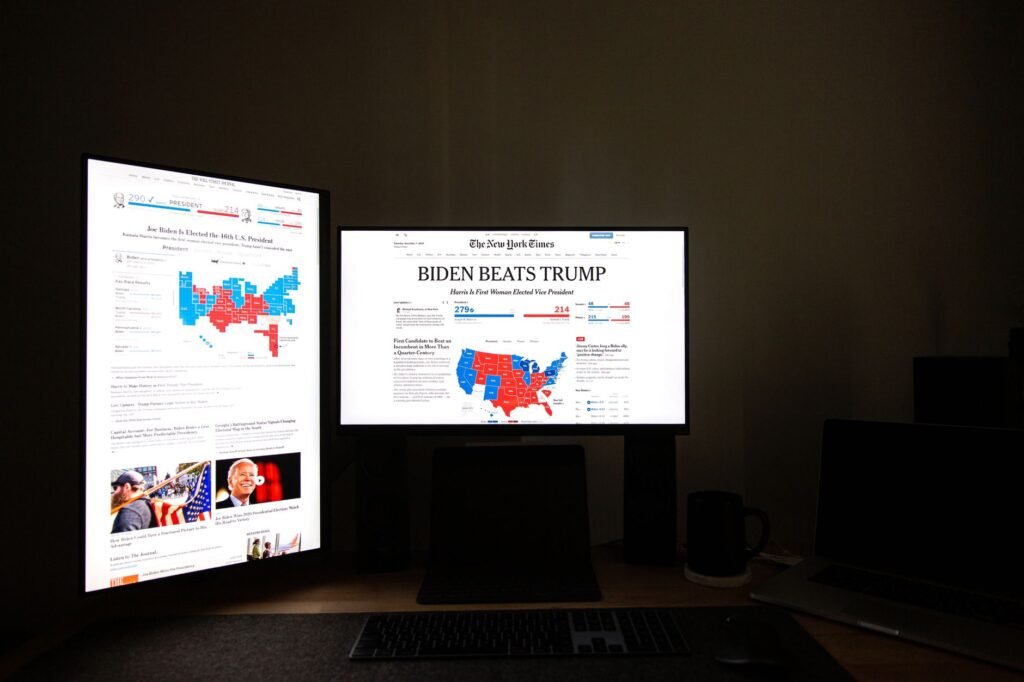
That unity is especially important in an age of misinformation, or when shifting results on election night and the days afterward trigger claims of election fraud. That was the situation in 2020, when Donald Trump forged ahead in declaring himself the winner and, in the months to follow, made unfounded claims of election rigging. Fox News and the AP were the first to call Arizona for Joe Biden, in the first significant sign that Trump would lose the race.
Inside the decision desk and data systems
David Scott, vice president of AP elections, cautions that the survey will not be the only thing that the news service will rely on to make projections of winners. “You are looking at so much information to do that,” he said. “We will use The Voter Poll as part of our work on the decision desk, but ultimately the thing that drives race calls more than anything else is our assessment of vote count,” he said.
Discussing the elections ecosystem, Scott noted that Americans can have one set of numbers they can count on. Technical companies, U.S. broadcast networks, international broadcasters and digital players are all relying on the work the AP does with local election officials to verify and standardize data in real time.
The Voter Poll combines traditional exit polling methodology with the approach formerly used in VoteCast. This allows researchers to interview voters leaving polling places as well as tens of millions of Americans who vote in advance. The survey will provide data in all 50 states where there is a statewide election, regardless of whether a contest is heavily contested.
Voter sentiment and timeline of data releases
Scott highlighted the importance of understanding the top issues motivating voters, noting that while many assume gas prices, energy prices and the cost of living are driving the election, the survey will reveal what actually moved the needle. “Well, tell me what the price of gas is two Tuesdays before the election, and that is the number-one predictor,” he said.
Voter Poll data will begin releasing at 5 p.m. ET, followed by candidate-specific details once polls close in individual states. A national survey looking at the overall country will be available at 8 p.m. ET.
When determining winners, Scott emphasized that accuracy is paramount. “Accuracy is 100, and speed is zero,” he said. While prediction markets are customers interested in AP count data, the AP decision team does not incorporate prediction market data into its process of declaring winners, focusing entirely on the primary source vote count.